Agricultural Spray Drones: A Buyer's Guide
The specs that matter, the platforms on the US market, and the rules to clear before a spray drone flies over your crop.
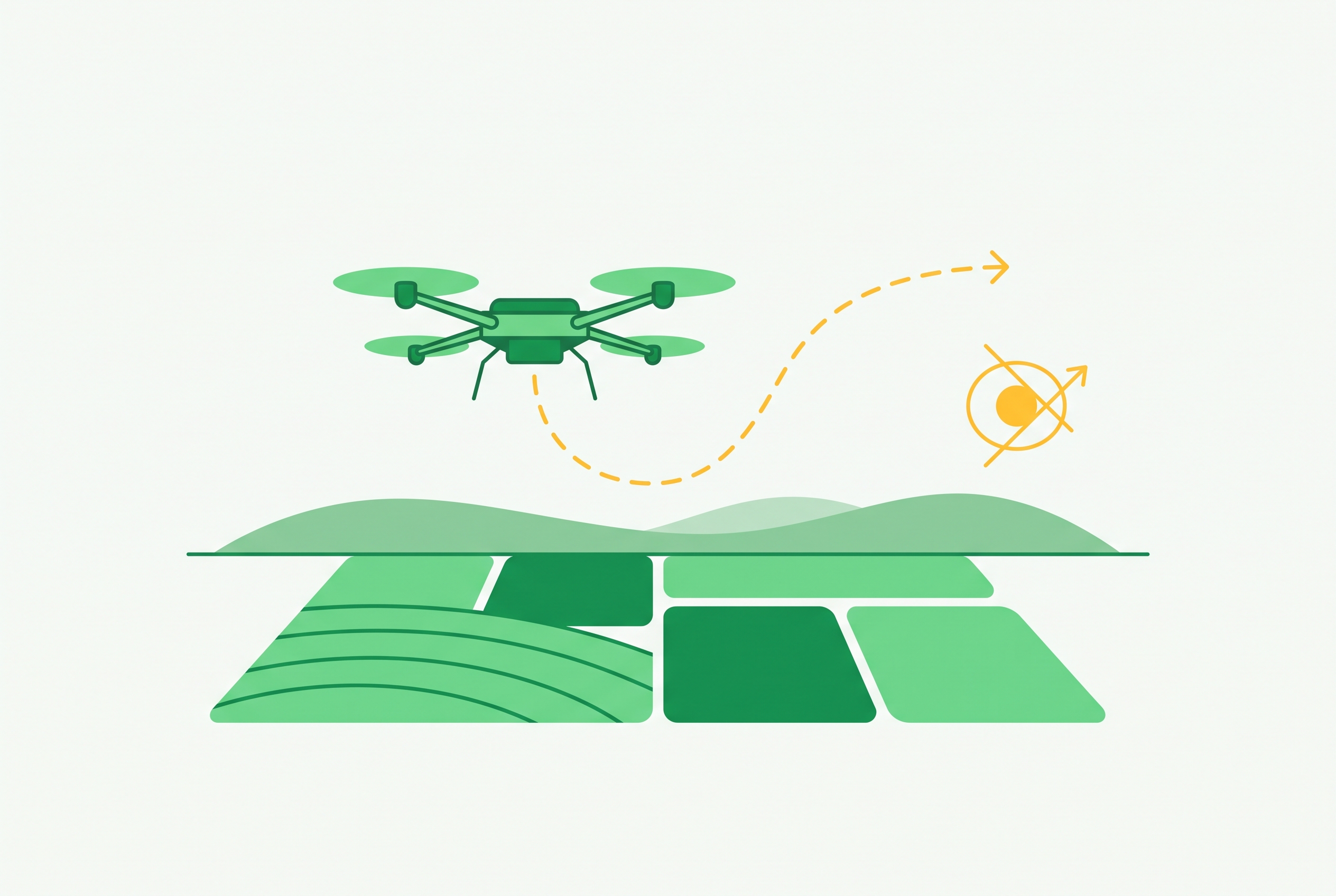
An agricultural spray drone is a heavy-lift multirotor that carries a liquid tank, flies a pre-planned route over a field, and uses its own rotor downwash to push droplets down into the canopy. Most current models also take a granular spreader in place of the tank, so the same aircraft can seed, fertilize or apply bait.
This guide is for growers deciding whether to bring spraying in-house, and for custom applicators adding drones to a fleet. It covers where drones beat the alternatives, which specifications actually change what you can do in a day, what is on the US market, and the paperwork that has to be in place before you fill the tank.
Where a spray drone earns its place
A drone sits between a ground rig and a manned aircraft. It is strongest on the jobs those two handle badly:
- Wet or soft ground. It never touches the soil, so it can treat a field a sprayer would rut, and it leaves no wheel tracks or compaction behind.
- Small, odd-shaped and hilly blocks. Terrain-following flight handles slopes, terraces and field corners that are slow or unsafe for a ground rig and uneconomic for an airplane.
- Spot and edge treatments. It can treat only the patches a scouting map flags, instead of the whole field.
- Tall crops late in the season, where a ground rig would knock the crop down.
It is weakest on large, uniform acreage at high carrier volumes. Every sortie ends with a landing to refill and swap batteries, so a drone's daily output depends on how fast your ground crew can turn it around, not just on how fast it flies. Before you buy, check that the products you use are labeled for aerial application at the low volumes a drone sprays.
The specifications that matter
Manufacturers publish their headline numbers under ideal conditions. Use them to compare models, then confirm the ones that matter to you in a demonstration on your own crop.
| Specification | Why it matters | How to check it |
|---|---|---|
| Tank or payload capacity | Sets how many acres each sortie covers before a refill. A bigger tank also means a heavier aircraft, which changes the FAA rules you fly under (see below). | Spec sheet; ask for the maximum takeoff weight when spraying, not the empty weight. |
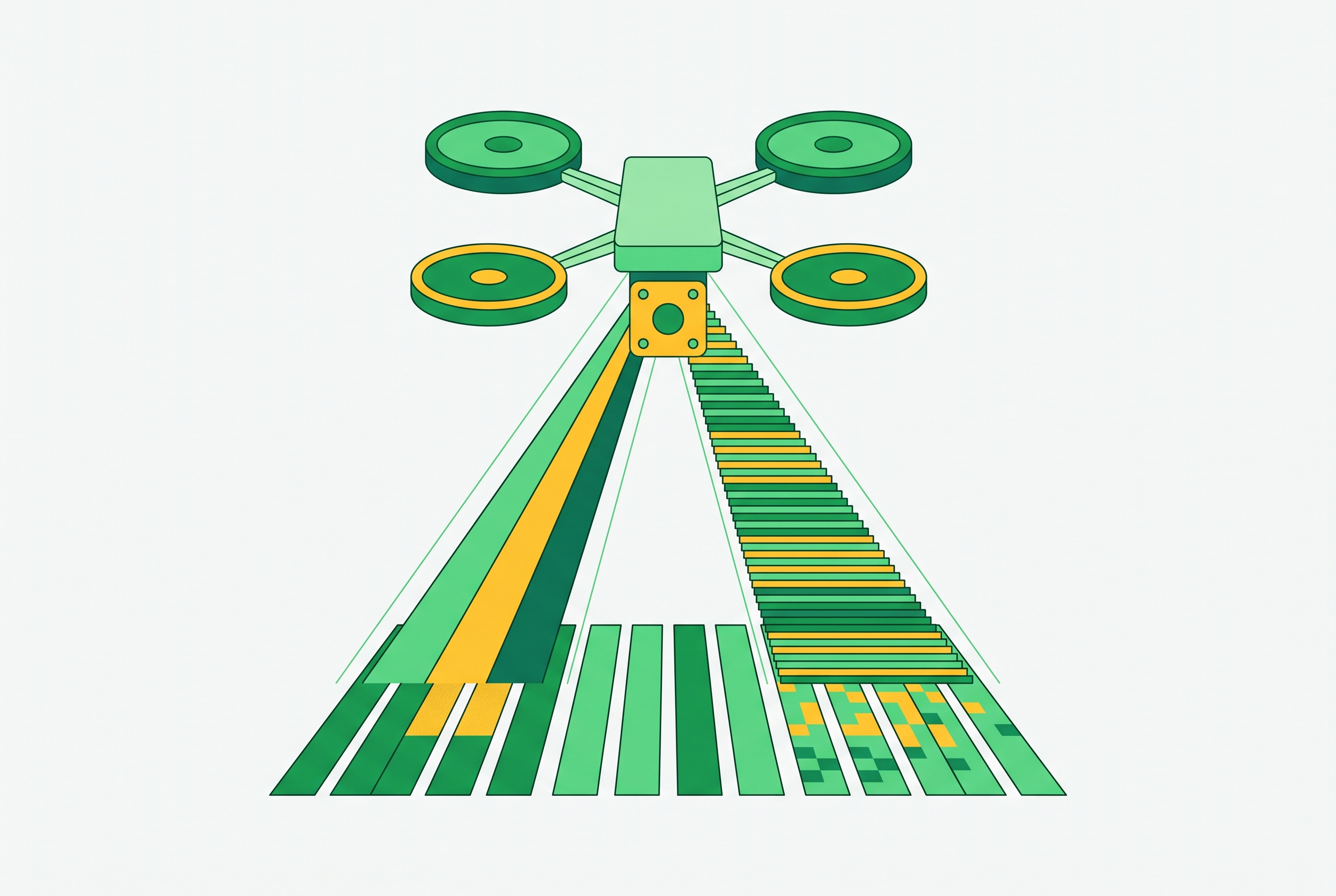
| Flow rate and swath | Together with flight speed, they set the application rate you can actually reach. Higher speed and a wider swath mean fewer gallons per acre. | Spec sheet, then a pattern test with water-sensitive cards at your target rate. |
| Nozzle type and droplet size | Centrifugal (rotary) atomizers and pressure nozzles behave differently. Droplet size drives both coverage and drift, and many labels set a droplet size class. | Ask what droplet range the system produces and whether a pressure-nozzle kit is offered. |
| Terrain following and obstacle sensing | Radar, LiDAR and cameras keep the drone at a constant height over slopes and away from trees, poles and wires. | Ask which sensors are fitted and whether it can fly without a pre-loaded map. |
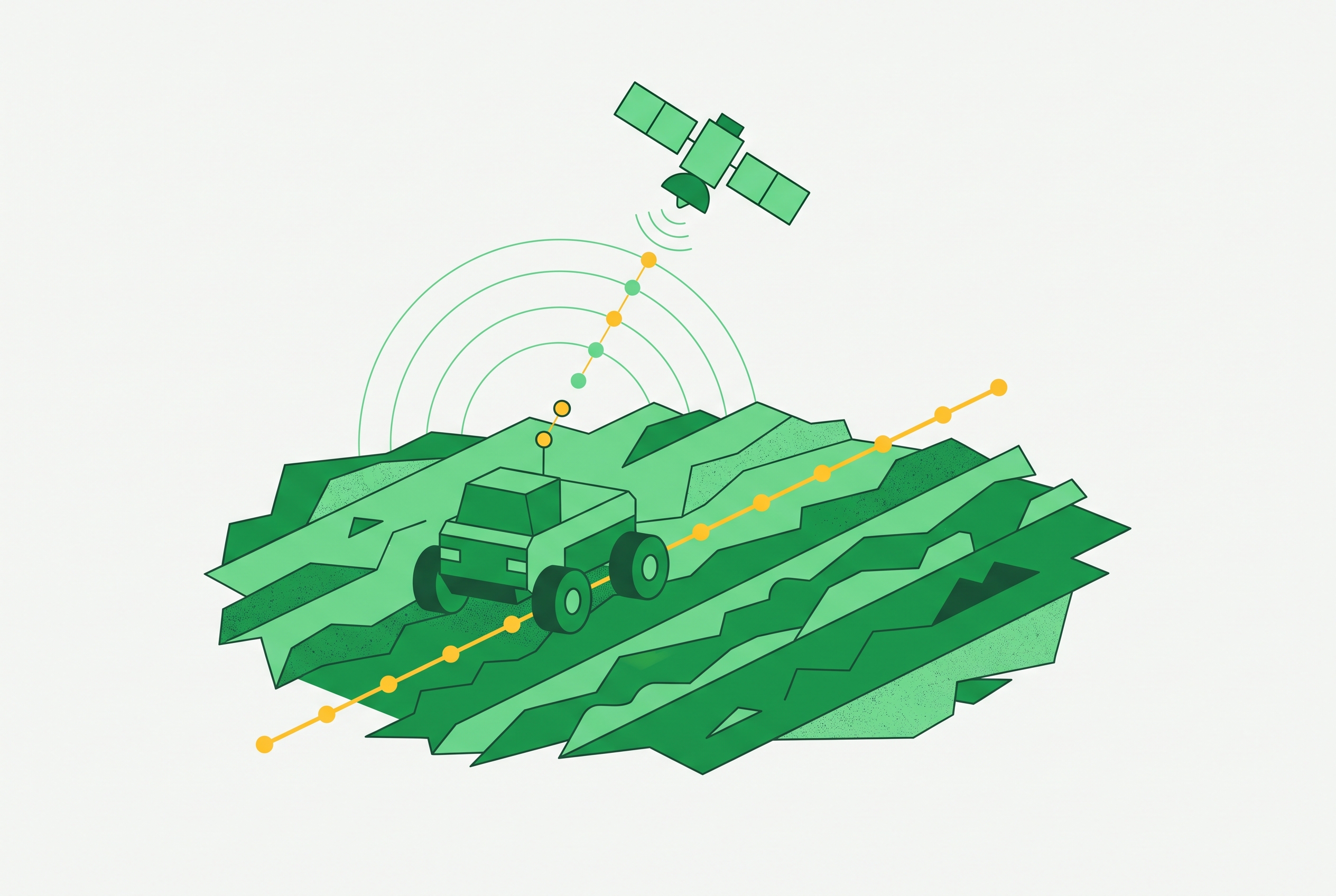
| Positioning | RTK correction holds the drone on its lines, which matters for overlap and for buffers along field edges. | Ask whether it uses a portable base station, a network (NTRIP) service, or both. |
| Batteries and charging | Battery count and charge time decide how long the drone can keep working. Most operations need a generator sized for the charger. | Ask how many batteries a continuous day needs, charge time, rated cycle life and the price of a replacement. |
| Spreading kit | Lets one aircraft do dry work such as cover-crop seeding or granular fertilizer. | Ask whether the spreader is included or sold separately, and its hopper size. |
| Mission software and records | Route planning, variable-rate maps from scouting imagery, and as-applied logs for your spray records. | Ask what the logs contain, how you export them, and whether the software needs an internet connection in the field. |
| Ingress protection | Spray mix, dust and washdowns are hard on electronics. | Ask for the IP rating of the aircraft and of the charger. |
| Dealer support | A drone that is down in a spray window costs more than the drone. | Ask where the nearest service center is, what parts the dealer stocks, and whether a loaner is offered. |
One manufacturer's own figures show how much speed and swath change the result. XAG publishes two settings for its P150: at 2.5 m/s and a 4 m swath it can apply up to 495 L/ha, while at 7 m/s and a 7 m swath it applies up to 102 L/ha. A drone that covers acres fast at a low volume may not be able to deliver the volume your label asks for at that speed.
Spray drones sold in the US
The US market has been dominated by imported aircraft. By DJI's own 2024 estimate, reported by AgFunderNews, about four out of every five spray drones used by US farmers were DJI-made. US manufacturing is growing after the FCC decision described below. The makers and models below are the ones most often seen in US fields; specifications come from each maker's own pages.
| Maker | Current spray models | Made in | What the maker publishes |
|---|---|---|---|
| DJI Agriculture | Agras T100, T70P, T25P | China | Launched globally in July 2025. Spraying payload of 100 L (T100), 70 L (T70P) and 20 kg (T25P, the compact model meant for one-person operation). |
| XAG | P150 | China | 70 kg maximum payload, 30 L/min maximum flow rate, 4D imaging radar for obstacles and terrain. |
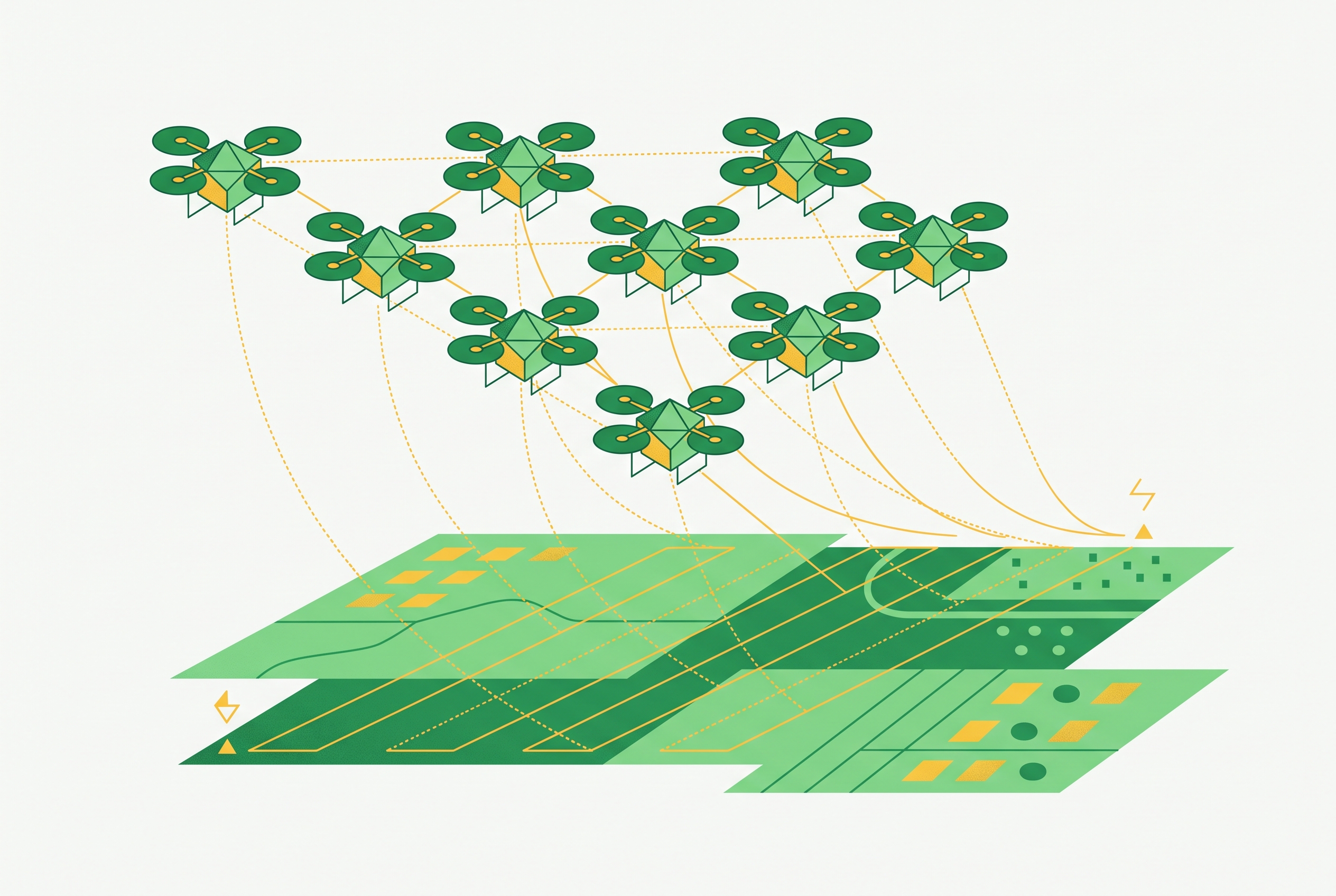
| Hylio | Pegasus, Ares (HYL-150), Atlas | Richmond, Texas, US | Tank options of 2.5 or 4 gal (Pegasus), 13 or 20 gal (Ares) and 30 or 45 gal (Atlas). Up to three drones from one ground station. |
| Ceres Air | Black Betty | Vermont, US (production starting) | Built on a cargo platform from Vector AGR and redesigned by Ceres, running its own software, according to AgFunderNews in January 2026. |
None of these makers publishes a single list price. DJI and XAG sell through dealers, and Hylio quotes builds through an online configurator. Batteries, chargers, the generator, the RTK base station and training all add to the price of the aircraft, so ask for a quote for a complete working kit.
Other companies are setting up US production: AgFunderNews reported in January 2026 that Agri Spray Drones plans to manufacture drones developed by EAVision in the US, and that Exedy Drones is building drone manufacturing in Michigan. Check each company's site for what is shipping now.
The FCC Covered List and what it means for a purchase
On December 22, 2025, the FCC added drones and drone critical components produced in a foreign country to its Covered List. Equipment on the list cannot get a new FCC equipment authorization, and without one, a new model cannot be imported or sold in the US.
What it does not do matters as much:
- Drones you already own can still be flown.
- Models the FCC authorized before the decision can still be imported and sold.
- The FCC lists batteries, motors, flight controllers, navigation systems and ground controllers among the critical components, so spare parts and upgrades for imported aircraft may get harder to find.
The FCC has also set out exemptions and transition dates, some of them running to January 1, 2027, and these may have changed since this guide was written. Before you buy, ask the dealer whether the exact model, and the battery and controller that come with it, are FCC-authorized and can be sold in the US. Then read the FCC's Covered List FAQ for the current rules.
Rules to clear before the first flight (US)
Spraying from a drone is an agricultural aircraft operation, and three regulators have a say in it.
FAA. 14 CFR Part 137 covers any aircraft, drones included, that dispenses pesticides or other substances for plant nourishment, soil treatment or pest control. The path depends on weight, counted with the full tank:
- Under 55 lb at takeoff: fly under Part 107 with a Remote Pilot Certificate, plus an exemption from Part 107's ban on carrying hazardous material and from parts of Part 137, plus a Part 137 agricultural aircraft operator certificate.
- 55 lb or more: fly under Part 91 and Part 137 with a Section 44807 exemption from several rules in Parts 61, 91 and 137, plus the Part 137 certificate.
Most full-size spray drones are over 55 lb loaded. Flying beyond visual line of sight, at night, or several drones per pilot takes further authorization. Our report on BVLOS waivers for agricultural drones walks through that sequence and the proposed Part 108 rule that would replace much of it. Check the FAA's page for whether that rule has been finalized.
EPA and the product label. The label is the law. Confirm that each product you plan to apply allows aerial application, and follow its directions on rate, carrier volume, droplet size and buffers. A drone does not exempt you from any of them.
Your state. States license pesticide applicators, and the category a drone operator needs varies by state. Ask your state's pesticide regulatory agency, usually the department of agriculture, which certification and business license apply before you take paid work.
Outside the US, the rules differ sharply. In the EU, Directive 2009/128/EC prohibits aerial spraying except where a member state grants a derogation, and countries handle drones differently. Our piece on regulatory pathways in the EU and US compares the two.
Buy, or hire a service?
Hiring a drone service provider gets you the aircraft, a certified operator and the paperwork without the capital cost or the learning curve. It is a sensible first season for most growers, and it shows you what the drone does on your own fields before you commit. Buying makes more sense when you have enough acres, or enough timing-critical jobs, that waiting for a provider's schedule costs you. The certification work above applies either way. A provider must hold it, so ask to see their exemption and Part 137 certificate.
Questions to ask before you sign
- Is this exact model, with its battery and controller, FCC-authorized and sold in the US today?
- What is its maximum takeoff weight when spraying, and which FAA path does that put me on?
- What application rate can it hold at the speed and swath you quote, on my crop?
- Which droplet sizes can it produce, and do they match my product labels?
- How many batteries and what size generator does a full day take, and what do replacements cost?
- Where is the nearest service center, what parts do you stock, and what happens if the drone goes down mid-season?
- What training is included, and do you help with the exemption and the Part 137 certificate?
- How do I export as-applied records for my spray logs?
Sources
- FAA: Dispensing Chemicals and Agricultural Products (Part 137) with UAS
- FCC: Covered List FAQs, UAS and UAS Critical Components
- UC ANR: What the FCC Covered List means for ag drone users
- AgFunderNews: FCC decision sparks scramble to localize ag spray drone production
- DJI: Agras T100, T70P and T25P launch
- XAG: P150 Agricultural Drone
- Hylio: AgDrone platforms