Edge AI Inference Hardware for Real-Time Perception in Field Robots
Picking the right edge chip hinges on your robot's actual workload and power budget.
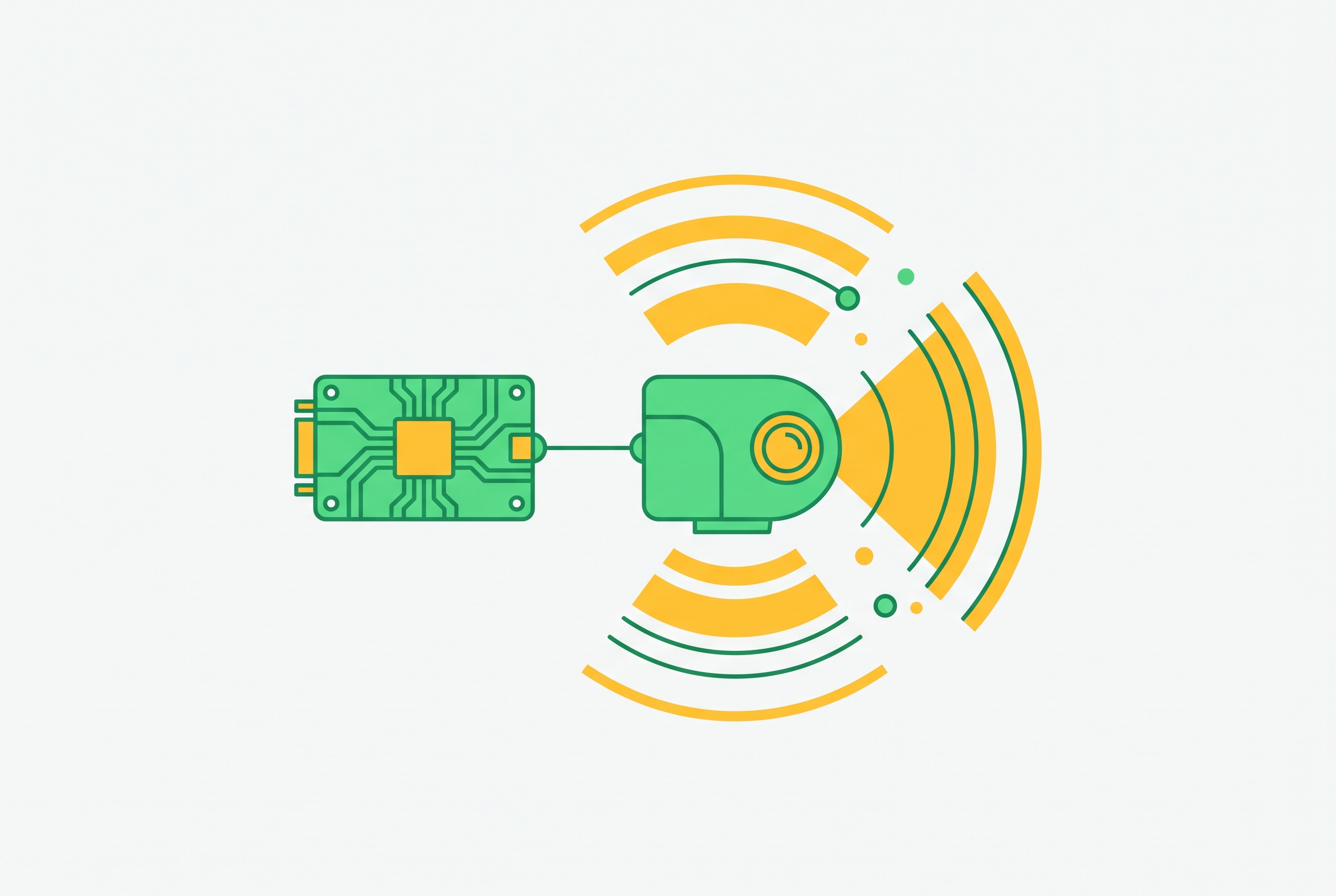
Choosing edge AI inference hardware for real-time perception in field robots is a layered engineering decision. The right platform matches the perception task to its latency, power, environmental, and integration constraints. A deployable system also needs hardware that can support model updates and operational data flows as the fleet grows.
Why field robots cannot rely on cloud inference for real-time perception
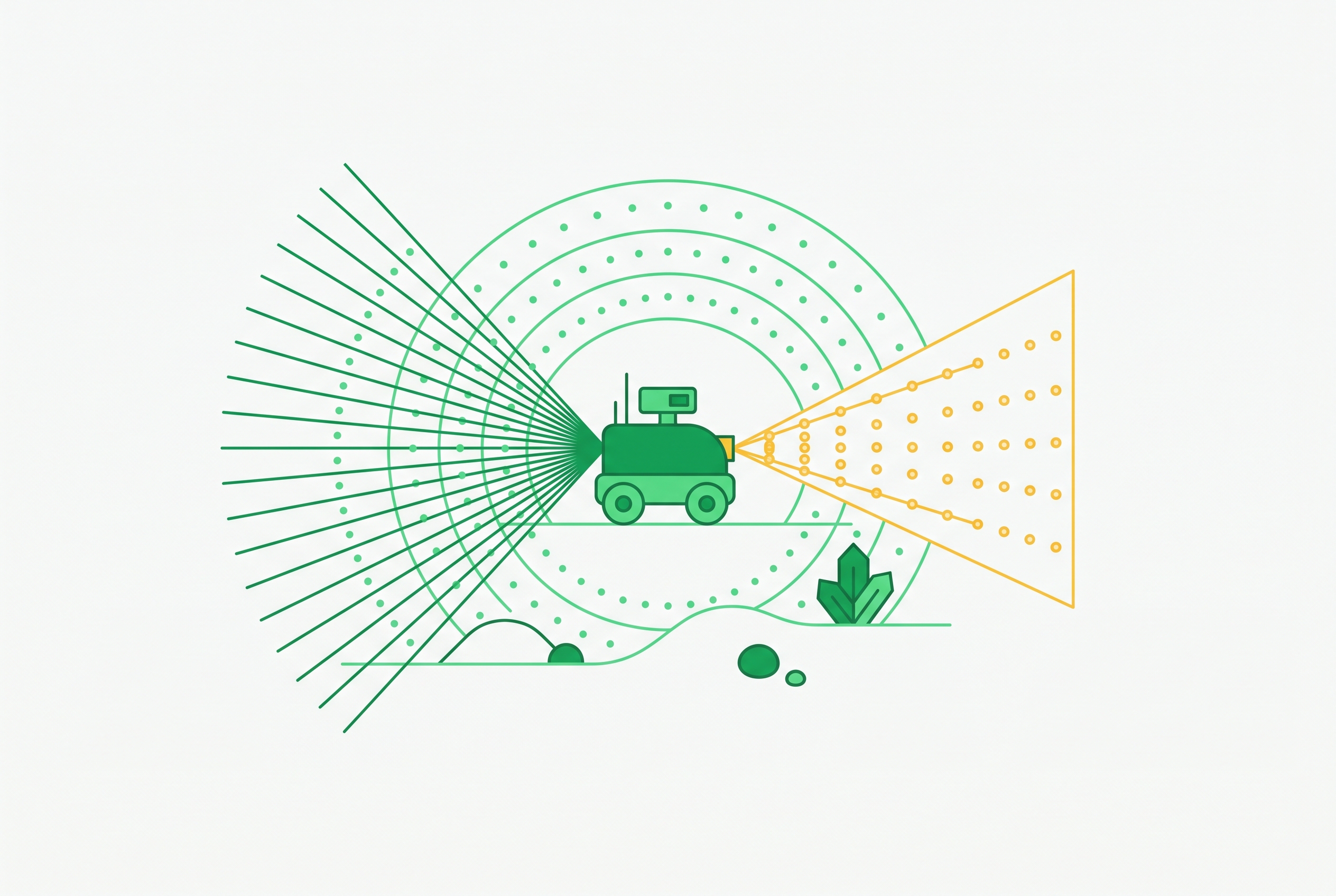
Agriculture, environmental monitoring, and outdoor inspection combine intermittent rural connectivity with hard actuation deadlines and continuous operation requirements. Edge-deployed models can achieve single-digit millisecond latency for an inference task that takes tens to hundreds of milliseconds through a cloud round-trip under ideal conditions. Congestion can push cloud latency far higher. For obstacle avoidance or weed detection, a decision that arrives after the robot has moved is wrong for the state in which the robot must act.
Power and connectivity further constrain the design. Rural deployments commonly depend on solar and battery power, while continuous video streaming at scale carries prohibitive bandwidth costs even where a connection exists. With local inference, the robot can make the immediate perception decision without that connection. Different operating speeds, workloads, and energy budgets make hardware selection a layered decision.
The two-tier architecture underlying all field robot perception systems
Perception is a stack of workloads, and hardware belongs where its capabilities match the work. The TinyML tier uses microcontrollers with kilobytes of RAM and milliwatts of draw for sensor preprocessing, including accelerometer fusion, simple obstacle detection, and keyword spotting. Offloading these tasks frees the main processor for harder work. The design rule is straightforward. If a task can run on a microcontroller, it should.
The edge AI tier handles camera frames, LiDAR data, object detection, SLAM, and increasingly on-device language commands. These workloads need single-board computers or compute modules with megabytes to gigabytes of RAM and watts of draw. Camera processing and multi-sensor fusion therefore belong on this tier rather than competing with lightweight sensing tasks for the same hardware. This division also preserves battery energy for the workloads that need the main processor. Within the edge AI tier, the next choice is whether to use general-purpose compute modules or specialized accelerator silicon.
What perception tasks actually demand from edge inference hardware
The task profile is the specification. For object detection, convolution-based models such as YOLOv8 variants run well on nearly any capable edge platform, but the throughput the robot needs depends on its speed. For weed identification, crop counting, and obstacle avoidance, frames must be processed fast enough for the robot to decide and act as it moves. Peak TOPS alone cannot establish that fit. TOPS comparisons must remain subordinate to the model, memory requirements, and latency of the intended workload.
Concurrent workloads change the calculation. Detection, depth estimation, and SLAM running together require memory capacity and compute headroom that entry-level modules cannot provide. A platform selected for one detector is therefore not automatically suitable for the complete perception stack. Transformer-based or language-conditioned tasks make memory capacity and operator coverage matter even more. Model type matters as much as the amount of arithmetic a device advertises.
Compression is also part of the hardware decision. With post-training quantization to INT8, detection models gain a 30–50% latency improvement and typically lose less than 1% in accuracy. Without it, many capable models cannot fit or run in real time on edge hardware. The practical comparison is therefore between platforms running the intended deployable model.
General-purpose compute modules: where Jetson and Qualcomm fit field robot perception
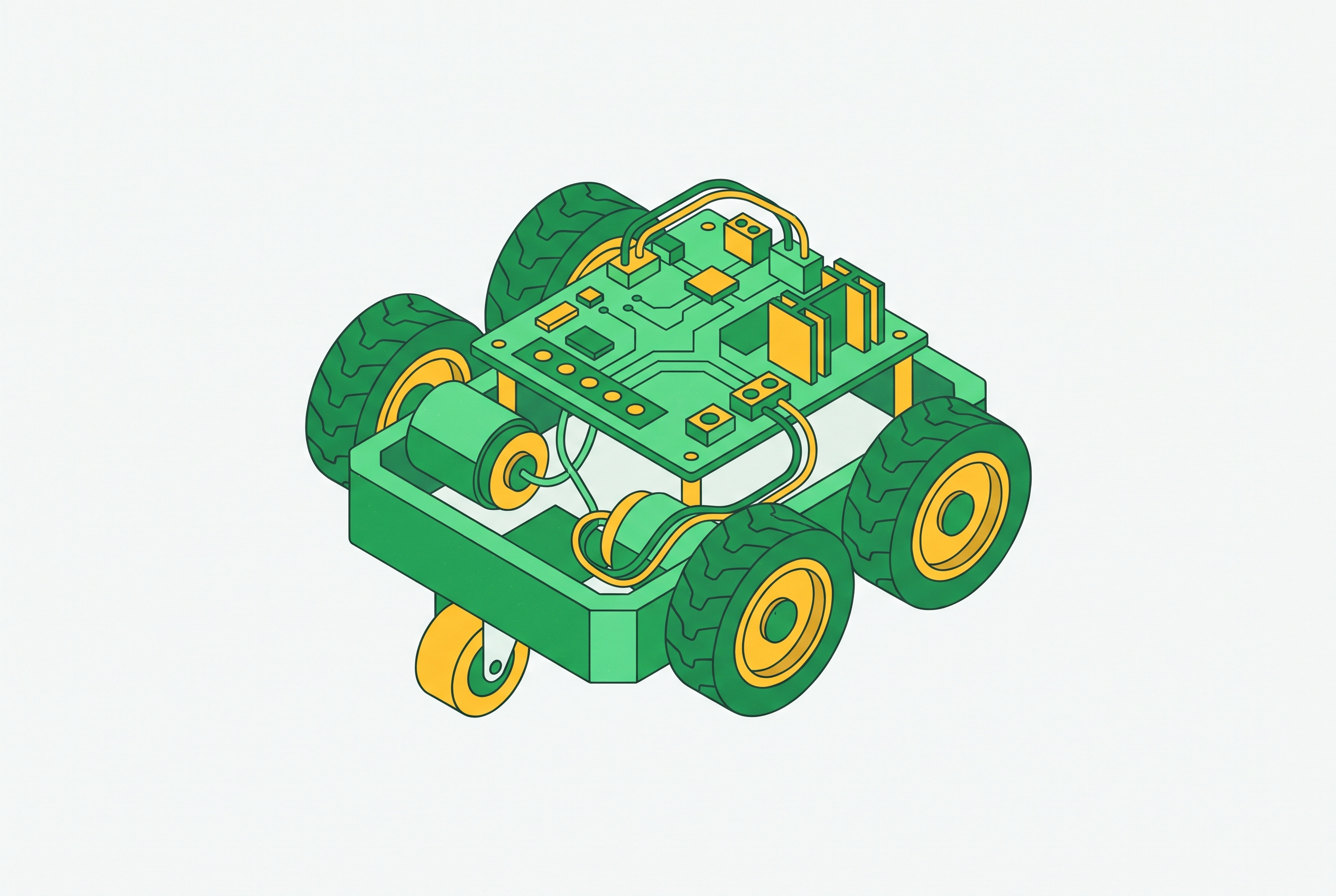
General-purpose compute modules are the workhorse tier when a robot needs several models, large memory for transformer-based or LLM workloads, or heterogeneous sensor integration. Their value is flexibility across the perception stack. That flexibility is supported by the software ecosystem around deployment and integration. It becomes consequential when the robot must combine vision with other sensing and processing requirements.
NVIDIA Jetson Orin Nano provides substantial TOPS capacity and 8 GB RAM for single heavy-model workloads. It is a practical entry point for serious edge inference. In drone-based crop monitoring benchmarks, it achieves high frame rates on YOLOv8x at low power in drone-optimized mode. That example establishes a fit for a demanding vision workload without making the module an answer to every concurrent perception requirement.
Jetson Orin NX and Qualcomm RB5 fit the broader class of robots combining multiple models or camera, LiDAR, IMU, and GPS inputs. They are options for different robot architectures. Their cost and power penalty relative to specialized silicon is a legitimate trade-off when the workload needs flexibility. When the task instead narrows to high-throughput vision at a fixed power ceiling, dedicated accelerators make the stronger efficiency case.
Specialized AI accelerator silicon: the efficiency argument for single-task or power-constrained deployments
A dedicated accelerator is a strong fit when the perception workload is well-defined and energy use is a binding constraint. For fixed object detection or classification, specialized silicon offers more performance per watt than general-purpose modules at a similar cost. Hailo-8 belongs in this selection for constrained vision using convolution-based models. Its temperature grade is a practical selection criterion because the chosen part must meet the deployment's operating range. Hailo-10H offers more headroom within the dedicated-accelerator power profile when Hailo-8 is insufficient.
SiMa.ai MLSoC provides 50 TOPS multimodal under 10W at a mid-range price point, making its multimodal capability relevant to robots combining camera and LiDAR streams. EdgeCortix RAIDEN, unveiled September 2026, is an energy-efficient AI chiplet platform designed for physical AI applications targeting robotics. Indie Semiconductor iND881, introduced June 2026, combines AI computing with low-latency image processing for smart cameras in automotive systems and robotics. Its relevance is to integrated camera-processor designs rather than a general replacement for the robot's compute module.
The strongest limitation of specialized silicon concerns the model roadmap. These chips excel at detection, classification, and segmentation dominated by convolution-based models, but are less suited to transformer-based or vision-language workloads requiring large memory and broad operator coverage. That limitation matters if language-conditioned perception is a near-term requirement. It is not, by itself, a reason to over-specify today's robot. Weed detection, crop counting, obstacle avoidance, and yield estimation remain largely fixed inference tasks using convolution-based models, and unused flexibility adds cost and power draw.
Mid-range and cost-sensitive platforms: where Raspberry Pi and Rockchip fit real deployments
Agricultural research, small-scale farming, and developing-market deployments often face budgets that make even entry-level Jetson modules difficult to justify. For these robots, a smaller platform can be the correct engineering choice. The condition is a tightly scoped workload. A robot using low-speed, single-model perception needs a different design from one running detection, depth estimation, and SLAM at the same time.
Raspberry Pi 5 with 8 GB RAM supports CPU-only inference for constrained single-model workloads. The AGRO rover uses Cube Orange+ and Raspberry Pi 5 with a compact object-detection model for yield counting without cloud dependence, demonstrating production use of that approach. CPU-only processing is therefore a legitimate option when the task fits its limits. Raspberry Pi 5 with Coral TPU or Rockchip RK3588 also belongs in the cost-constrained, single-model selection. Model selection must match the platform's capacity as the workload expands.
Those limits are material. Multi-model simultaneous inference, SLAM combined with detection, and LLM-based command parsing are beyond this tier in most configurations. If these capabilities are requirements, the apparent saving does not hold. The distinction is not between serious and inexpensive hardware, but between a scoped task and a platform asked to exceed it.
Environmental and integration constraints that hardware specs alone do not capture
Compute suitability does not establish field suitability. Operating temperature and thermal management can rule out a platform before its inference performance matters. Dust and humidity call for ingress protection, while vibration and electromagnetic interference from motors and actuators each place their own physical limits on the design. These requirements concern the deployed system. A platform that cannot survive its environment is not viable regardless of its benchmark results.
Sensor connections create another hard boundary. Qualcomm RB5 supports up to 7 concurrent camera inputs, while Jetson AGX Thor provides CAN bus and GPIO support. Connecting the platform to the sensor suite without extra hardware requires matching these specifications to the suite.
A module drawing 25W peak on a 12V rail requires different battery, regulator, and thermal management from a 3W accelerator. The chip's TDP alone leaves out some of those demands on the system. Software adds another integration cost through deployment tooling, including TensorRT, TensorFlow Lite, ONNX Runtime, and llama.cpp for LLM inference. OEM design support, driver maturity, and supply chain stability also determine whether capable hardware can become a shipping product.
How the "train in the cloud, infer at the edge" architecture changes hardware selection
Local perception assigns real-time decisions to the robot while centralized platforms handle model training, fleet-wide monitoring, simulation, and lifecycle management. Field robots are therefore both inference endpoints and sources of operational telemetry. Fitting their hardware to that wider data architecture is a production requirement.
The improvement cycle begins with real-world data from deployed systems informing model development. Updated models are then validated and packaged centrally before improved software returns to the endpoints. Hardware without an OTA update path, telemetry egress, or remote monitoring cannot participate fully in this cycle. Its inference performance does not compensate for that gap at fleet scale. The platform decision must therefore account for how the model will change as well as how its current version runs.
Tesla's connected vehicle fleet provides the reference architecture through operational data collection, centralized model training, and software distribution across deployed systems. Field robotics deployments are converging toward the same division between local decisions and centralized improvement. That requires telemetry ingestion, monitoring, software distribution, and governance as well as the edge chip. A team that selects hardware without considering OTA paths, telemetry architecture, and model lifecycle tooling faces expensive re-engineering when the fleet grows or the model changes.
A decision framework for matching hardware tier to perception requirement in field robots
A defensible selection follows four filters in order, namely task profile, environment and power, integration and software, and data architecture. The first establishes the candidate tier. A fixed vision task using a convolution-based model at a hard power ceiling points toward Hailo-8 or SiMa.ai MLSoC because efficiency has more value than unused flexibility. Concurrent models or fusion across camera, LiDAR, IMU, and GPS point toward Jetson Orin NX or Qualcomm RB5 because memory and heterogeneous compute become decisive.
The task filter must cover what the robot will need soon, while leaving room for possible future workloads to remain possibilities. Agentic or language-conditioned perception on the near roadmap calls for Jetson Orin NX-class or above, since smaller platforms will not accommodate quantized LLM co-deployment without sacrificing vision performance. A cost-constrained, low-speed, single-model deployment can instead justify Raspberry Pi 5 with Coral TPU or Rockchip RK3588.
The environmental filter eliminates hardware that cannot meet the operating temperature, ingress protection, vibration, or system power requirements. The integration filter then tests sensor I/O, software tooling, OTA support, and supply chain stability before commitment. Finally, the data architecture filter establishes whether telemetry egress and remote software distribution support continuous model improvement at scale. No platform dominates all four dimensions, so the choice remains layered, with the task profile as the legitimate tie-breaker between compute, efficiency, and flexibility.
Sources
- Edge AI and IoT: How AI Is Moving to the Network Edge in 2026
Supported the article's coverage of edge AI motivations including latency advantages over cloud inference, bandwidth costs, and the shift toward local decision-making.
- Vision-Language Models on the Edge for Real-Time Robotic Perception
Informed the discussion of vision-language and transformer-based models running on edge hardware for robotic perception, including memory and operator coverage requirements.
- Embodied Foundation Models at the Edge: A Survey of Deployment Constraints and Mitigation Strategies
Provided grounding for the deployment constraints section covering power budgets, model compression, quantization trade-offs, and the two-tier hardware architecture for embodied systems.